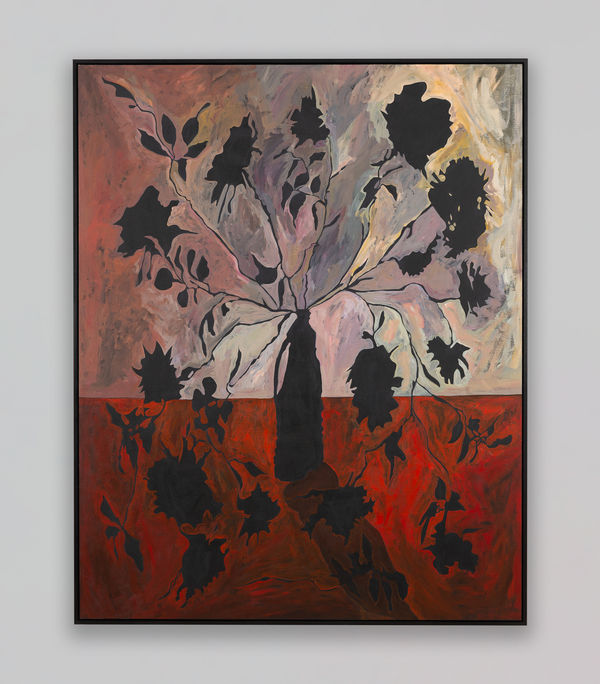
Fatal Flowers marks a significant evolution in Thirza Schaap's practice, translating the visual language of her celebrated Plastic Ocean project into the medium of painting. Known internationally for collecting discarded plastic waste washed ashore along the Cape coastline and transforming it into meticulously staged photographic still lifes, Schaap now reimagines these poignant compositions through paint. In this new body of work, the vase itself becomes the protagonist. Each vessel is fashioned from a discarded plastic bottle, elevating an object synonymous with pollution into a contemporary heirloom. Rendered with remarkable precision and imbued with a surreal stillness, these paintings blur the boundaries between beauty and environmental consequence.
The exhibition draws upon the rich tradition of the still life, a genre historically associated with abundance, mortality, and the fleeting nature of existence. Schaap reinvents this tradition by replacing ornate ceramic vessels with repurposed plastic containers collected from the ocean's edge. Overflowing with lush bouquets that appear both abundant and impossibly perfect, the compositions evoke the visual splendour of Dutch Golden Age painting while simultaneously confronting the realities of contemporary consumer culture. The flowers seduce with their beauty, yet the vessels beneath them reveal an uncomfortable truth, transforming each work into a modern vanitas in which environmental degradation quietly replaces the symbolic decay of earlier centuries.
Painting offers Schaap a new space for contemplation. Freed from the constraints of the photographic image, she heightens colour, light, and atmosphere, creating dreamlike scenes that hover between reality and imagination. The meticulous rendering of every petal and fold of plastic encourages prolonged looking, allowing viewers to move beyond the immediate allure of the image and consider the hidden narratives embedded within it. Fatal Flowers ultimately asks us to reconsider our relationship with beauty, consumption, and waste. In transforming discarded plastic into objects of extraordinary elegance, Schaap reveals both the resilience of nature and the enduring consequences of human intervention, creating works that are at once visually captivating and quietly urgent.
-
 Thirza Schaap, Les Fleurs Fatales du Printemps, 2026
 -
Thirza Schaap, Twenty blue flowers, 2025
-
Thirza Schaap, Grief in greens, 2025
-
Thirza Schaap, La Voix de la Nature, 2026
-
Thirza Schaap, Nine black flowers, 2025
-
Thirza Schaap, Seven black flowers, 2025
-
Thirza Schaap, Night Fall, 2026
-
Thirza Schaap, Twenty-two black flowers and bow, 2025
-
Thirza Schaap, Printemps Noir, 2026
-
Thirza Schaap, La Petit Fleur Noire, 2026
-
Thirza Schaap, Illford 800, 2026
-
Thirza Schaap, Fifteen orange flowers, 2025
-
Thirza Schaap, En Feu, 2026
-
Thirza Schaap, Le Bouquet de Elle, 2024
-
Thirza Schaap, Fourteen red flowers, 2025
-
Thirza Schaap, Le Miirior de la Nature, 2026
-
Thirza Schaap, Last Sun Rise, 2026
-
Thirza Schaap, Flamboyant Fading, 2026